


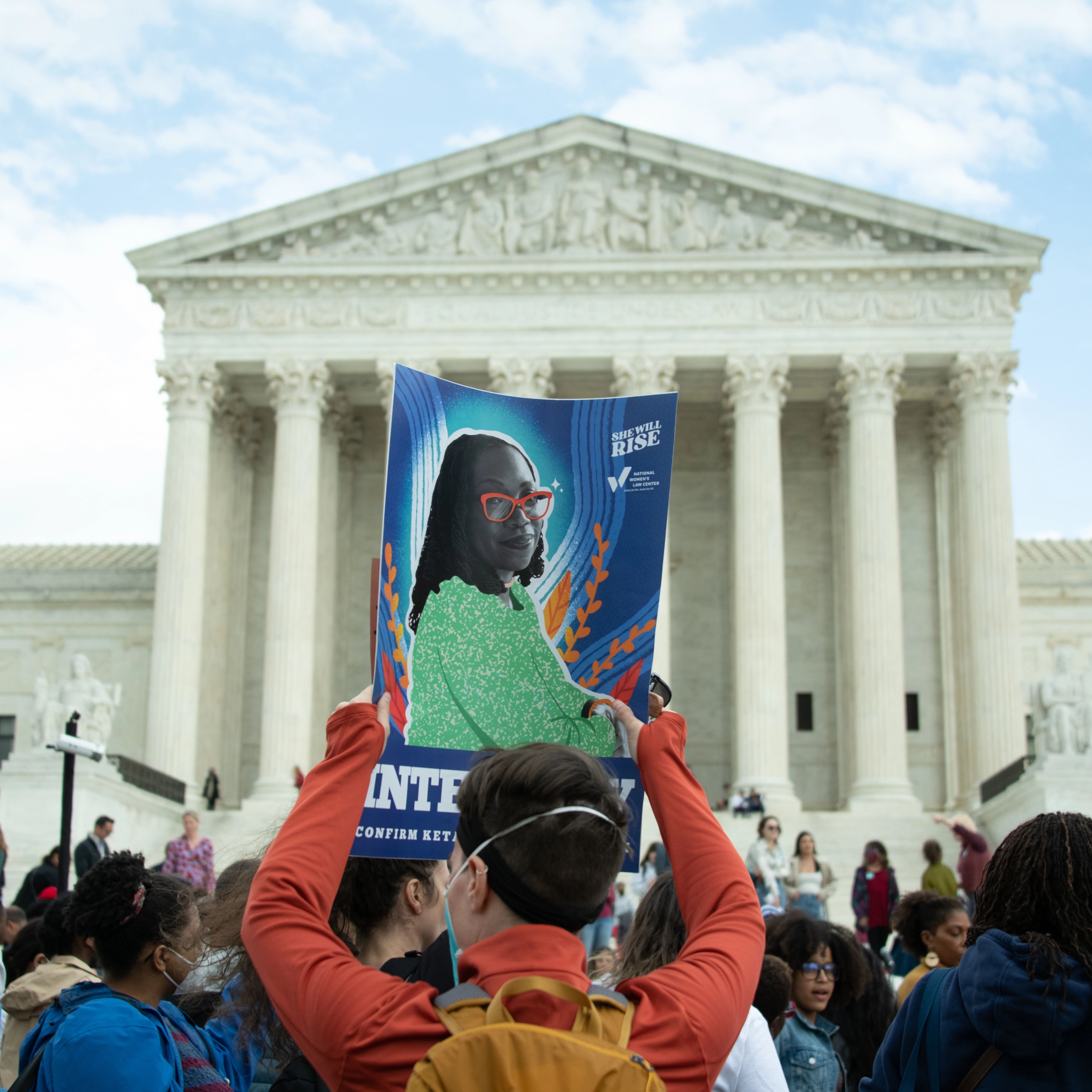


You know, the longer Justice Ketanji Brown Jackson spends in the public eye, the more she unintentionally explains a lot about how certain Democrats view ordinary Americans — especially the women they claim to champion. It is not flattering.
When you watch her during Supreme Court oral arguments or catch clips of her past statements, a pattern emerges that feels less like elite legal brilliance and more like someone who is occasionally outmatched by the basics. And that pattern sheds uncomfortable light on why so many on the left fight tooth and nail against something as straightforward as requiring voter ID. They act like large swaths of the population — women, minorities, the elderly — are simply too overwhelmed, too intimidated, or frankly too incompetent to handle getting a free or low-cost photo ID. The more Jackson speaks, the more that condescension starts to make a twisted kind of sense to them.
A Pattern of Struggles with Basic Legal Concepts
Look, this is not about nitpicking every word. Plenty of smart people stumble in high-pressure settings. But when it is a Supreme Court justice, appointed with great fanfare as the first Black woman on the Court, the moments add up. During her confirmation hearings, Sen. Marsha Blackburn asked a simple question: Can you define what a “woman” is? Jackson’s response — “I’m not a biologist” — went viral for a reason. It was not just evasive; it revealed a reluctance to engage with basic biological and legal reality, especially on issues like women’s sports, prisons, and single-sex spaces where the distinction actually matters.
On the bench, her questioning in oral arguments has drawn criticism for sometimes wandering into hypotheticals that feel more rooted in empathy or equity than in tight textual or historical analysis. Colleagues like Thomas, Alito, or Barrett often cut straight to the constitutional core. Jackson’s interventions can come across as fuzzier — heavy on outcomes, lighter on the fixed meaning of the law. Critics have pointed to exchanges where she seems to grapple with standing, jurisdiction, or statutory interpretation in ways that leave observers scratching their heads. It is not that she is unintelligent. Far from it. But the performance does not always scream “towering legal mind selected purely on merit.”
And that is the rub. If the highest court in the land can feature a justice who rose through elite credentials (Harvard, Harvard Law, federal judgeships) yet sometimes appears overmatched in real-time debate, it feeds a certain elite worldview: maybe vast numbers of regular folks really do need the government’s (or the party’s) helping hand for even simple civic tasks.
Jackson as Exhibit A
Democrats have leaned hard into this framing for years on voter ID. The argument goes that strict requirements disenfranchise women, minorities, and the poor because they are supposedly too busy, too poor, too scared of the DMV, or just not sharp enough to sort it out. Never mind that IDs are free in most places, that millions use them daily for banking, flying, buying beer, or picking up prescriptions. Never mind that women have voted at rates equal to or higher than men for decades without some magical barrier suddenly appearing.
Jackson is not the architect of this mindset. She is more like an exhibit that makes the subtext harder to deny. When identity seems to play a bigger role in selection than raw analytical horsepower, it reinforces the quiet assumption that certain “protected” groups need extra coddling. If even a Supreme Court justice can deliver moments that invite fair questions about depth versus demographics, why wouldn’t party strategists assume the average voter in their coalition needs the state to lower the bar on election integrity?
The Data Does Not Match the Narrative
The data keeps slapping this narrative down. Recent polls from Pew, Gallup, and others show voter ID enjoys massive support: around 80-84% overall, with strong majorities even among Democrats (often 67-71%), Blacks, Hispanics, and women. In states like Georgia and Indiana that rolled out strict photo ID years ago, Black and minority turnout did not crater — it often held steady or climbed. Turnout among women has not suffered either. People manage far more complicated things every single day.
Yet the resistance from Democrats persists. Why? It feels less about protecting vulnerable voters and more about protecting power. Loose rules, expanded mail-in without robust checks, ballot harvesting — these create gray areas that can be gamed. Framing anyone who wants basic verification as racist or sexist is a convenient shield. And treating grown women like they cannot handle a one-time trip to get an ID? That is not empowerment. That is patronizing as hell.
A Republic Requires Competent Citizens
A healthy republic runs on the idea that adult citizens are competent enough to handle the basics: read a ballot, show who they are, make a choice. Lowering that presumption for entire demographics — especially women, who are the majority of voters — is not compassionate. It is insulting to their agency. It erodes trust in the system Justice Jackson helps guard.
The more you listen to her speak off-script, the clearer it gets. This condescension isn’t coming from nowhere. It is baked into a worldview that sees voters not as capable agents, but as clients who need managing. Voter ID is not some oppressive hurdle; it is the bare minimum for confidence in elections. Pretending otherwise does not lift people up — it just reveals how little faith some elites have in them.
Featured image credit: DepositPhotos.com