


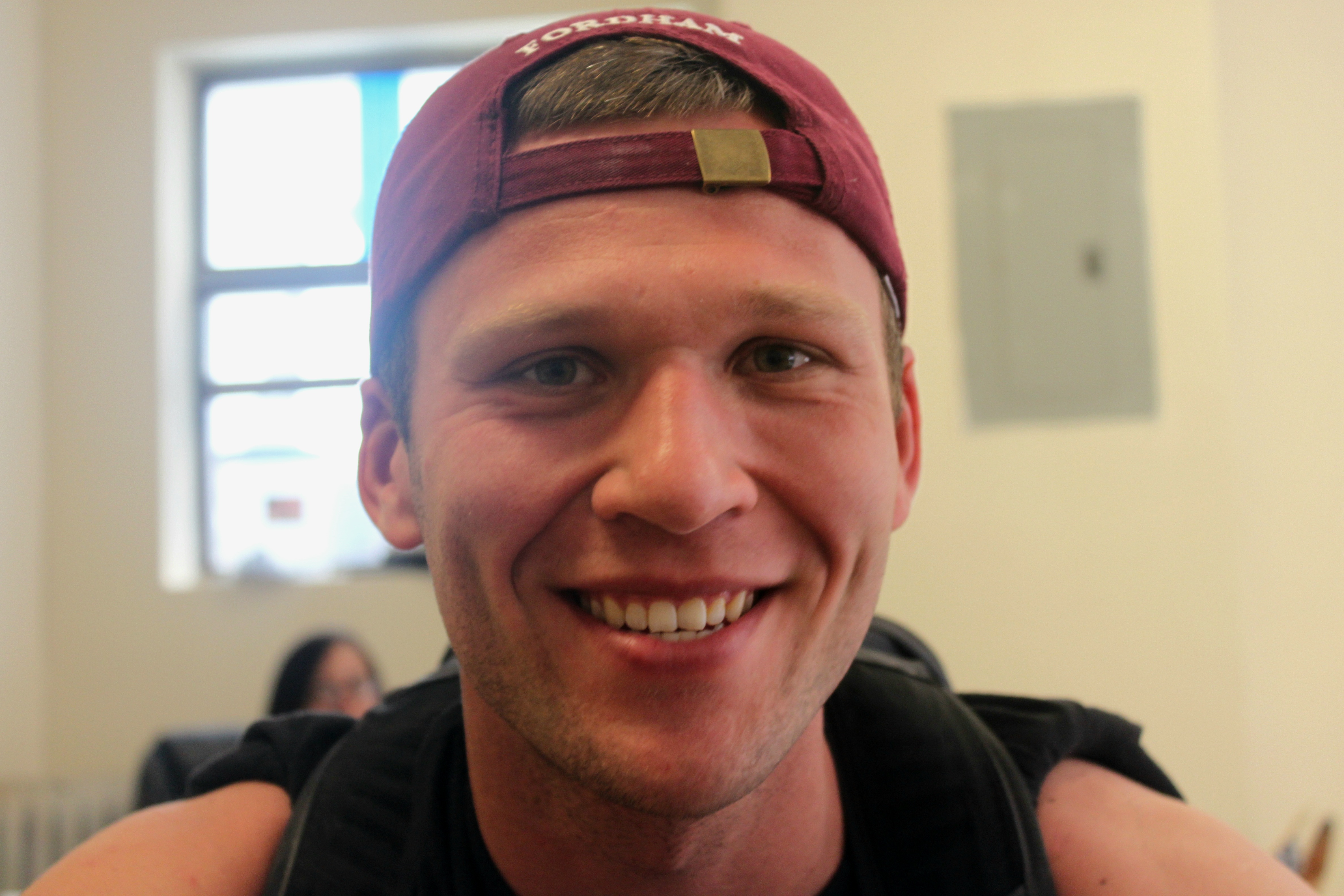


In December 2020, Gonzalo Duran received a request that would stay with him long after the conversation ended.
Yegor Zubarev’s mother asked him to do one simple thing: tell people who her son was.
Years later, Duran says he is still keeping that promise.
Last week, the Bronx based nonprofit Devil Dog USA Incorporated announced the launch of a national legislative initiative bearing Zubarev’s name, the Corporal Yegor Zubarev Veterans Bill. The proposal aims to expand housing protections, immigration assistance, and mental health support for veterans across the United States.
For Duran, the bill is more than policy. It is the continuation of a mission that began more than a decade ago in the library of Fordham University.
A Chance Meeting That Sparked a Movement
Duran first met Zubarev in 2013 at Fordham University in the Bronx.
At the time, Duran was already advocating for student veterans who were struggling to find housing after leaving the military. Zubarev stopped to help.
What began as a brief conversation soon grew into a partnership that would shape both men’s lives.
Zubarev’s story itself reflected the promise of the American ideal. Born in Russia, he immigrated to the United States and later joined the United States Marine Corps. During his service he became a United States citizen, a milestone he carried with immense pride.
After leaving the military, he enrolled at Fordham University, determined to continue serving his adopted country in new ways.
Duran had left the Marine Corps in 2011 and soon found himself homeless. He said it was not because he lacked income or a plan, but because of what he describes as “cracks in the system”.
Veterans attending college under the Post 9/11 G.I. Bill received a housing stipend, but many landlords refused to recognize it as legitimate income.
Without that recognition, veterans could not qualify for apartments.
“It was not that we did not have money,” Duran said. “It was that the system did not recognize it.”
Zubarev faced the same reality.
For more than six months he lived in a shelter while attending school.
When Duran learned of Zubarev’s situation, he decided to intervene directly. He knocked on doors, spoke to landlords, and explained that Zubarev was a veteran, a Fordham student, and someone who had reliable income through his benefits.
Eventually he found a landlord willing to rent to him.
For Duran, the experience was transformative.
“That moment changed my life,” he said. “I realized how many veterans across the country were dealing with the exact same problem.”
From Personal Struggle to Public Policy
The two men began collecting data and documenting stories from veterans nationwide. They wrote articles, organized town hall meetings, spoke to reporters, and pressed elected officials for reform.
Their advocacy eventually contributed to a significant breakthrough.
In 2017, New York City passed Local Law 119, strengthening the city’s Human Rights Law by recognizing Post 9/11 G.I. Bill housing allowances as lawful income for the purpose of renting an apartment.
For thousands of veterans in New York City, the change opened doors that had previously been closed.
But Duran and Zubarev both knew the victory was incomplete.
The law applied only within city limits.
Veterans elsewhere in the country still faced the same barriers.
A Quiet Architect Behind the Scenes
Within Devil Dog USA, Zubarev served as the organization’s program manager.
He worked largely behind the scenes, helping craft policy proposals, coordinate town halls, and build advocacy campaigns around veterans’ issues.
Duran describes him as intensely humble.
“He was shy, but incredibly driven,” he said. “Most people had no idea how much work he was doing.”
Zubarev also had a long term ambition of becoming a lawyer.
While Duran continued expanding Devil Dog USA’s programs, Zubarev focused on his legal studies, hoping one day to advocate for veterans in courtrooms as well as in public policy.
Their relationship evolved from classmates to colleagues, and eventually something closer to family.
A Legacy That Continues
Zubarev died at the age of 33.
For those who knew him, the loss was deeply felt. Duran believes the challenges many veterans face after returning home navigating housing barriers, bureaucratic systems, and gaps in mental health care can weigh heavily on those who once served.
“He fought a lot of battles after the uniform came off,” Duran said. “And those battles are real for a lot of veterans.”
Duran says his friend’s experience is one of many reminders that the nation’s support systems for veterans are still evolving and must continue to improve, particularly when it comes to mental health resources and access to care.
After Zubarev’s passing, Duran delivered his eulogy.
Only then, he said, did many people begin to understand the scope of Zubarev’s work.
“How many thousands of people he helped,” Duran said. “Most of them never even knew his name.”
When Zubarev’s mother asked him to tell the world who her son was, Duran said he knew exactly how he would do it.
By continuing the work.
The Corporal Yegor Zubarev Veterans Bill
The newly proposed federal legislation seeks to address the same barriers Zubarev once faced.
The bill focuses on three core reforms.
• National Housing Protection: Prohibiting landlords and housing providers from refusing to rent to veterans solely because they receive housing allowances under the Post 9/11 G.I. Bill.
• Priority Naturalization: Providing expedited citizenship processing for eligible non citizen veterans who served honorably under the Immigration and Nationality Act.
• Mental Health Access: Streamlining reporting requirements and reimbursement timelines for veteran mental health grant programs to ensure faster delivery of services.
Duran emphasizes that the proposal does not create new entitlements or increase federal spending. Instead, it enforces commitments already made to service members when they enlisted.
“It is about honoring the promises we made when they stepped onto the yellow footprints at boot camp,” Duran said.
A Promise That Lives On
For Duran, the bill is not simply legislation.
It is a continuation of a promise.
A promise made to a mother.
A promise made to a friend.
And a promise made to every veteran who returns home expecting the country they served to keep its word.
“This is his legacy,” Gonzalo Duran said quietly. “And we are just getting started.”