




In a moment when public trust in government remains fragile, New York City is quietly launching one of its most ambitious democratic experiments yet.
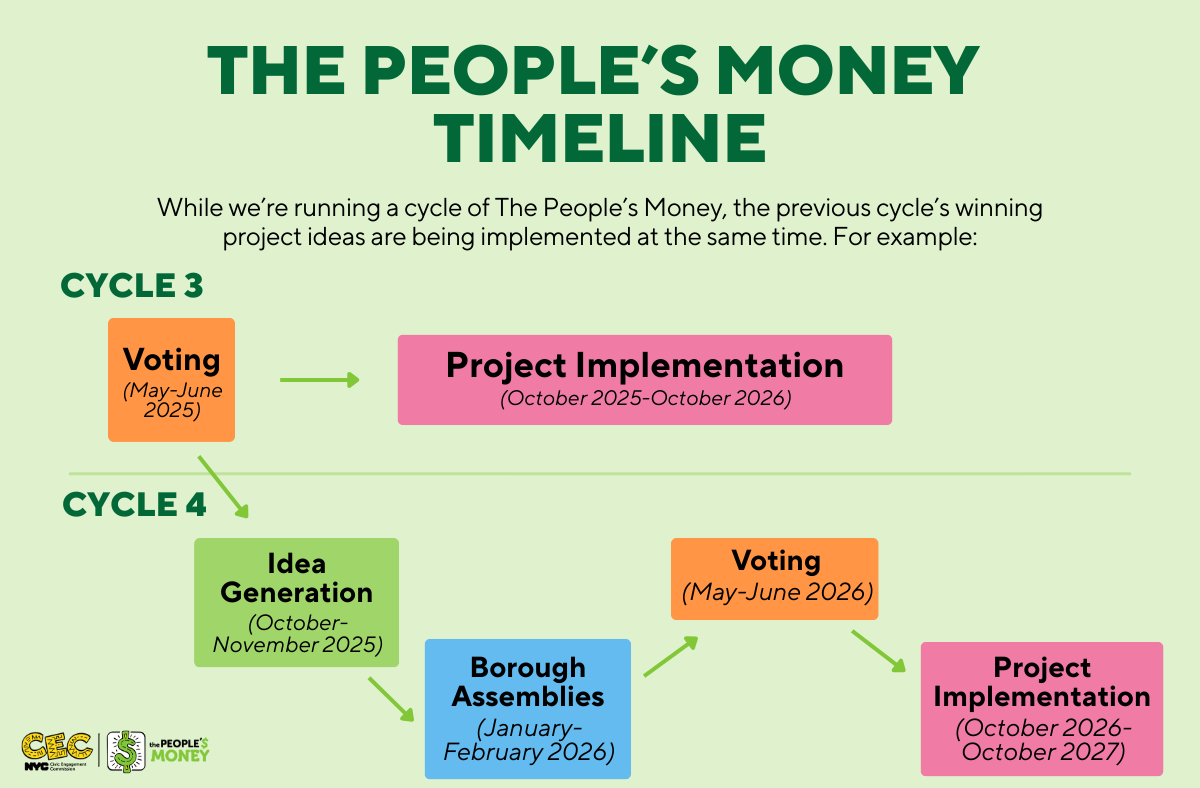
This week, the New York City Civic Engagement Commission (CEC) formally kicked off the next phase of The People’s Money, the city’s participatory budgeting program, an initiative that hands real decision making power directly to residents as it enters its fourth cycle.
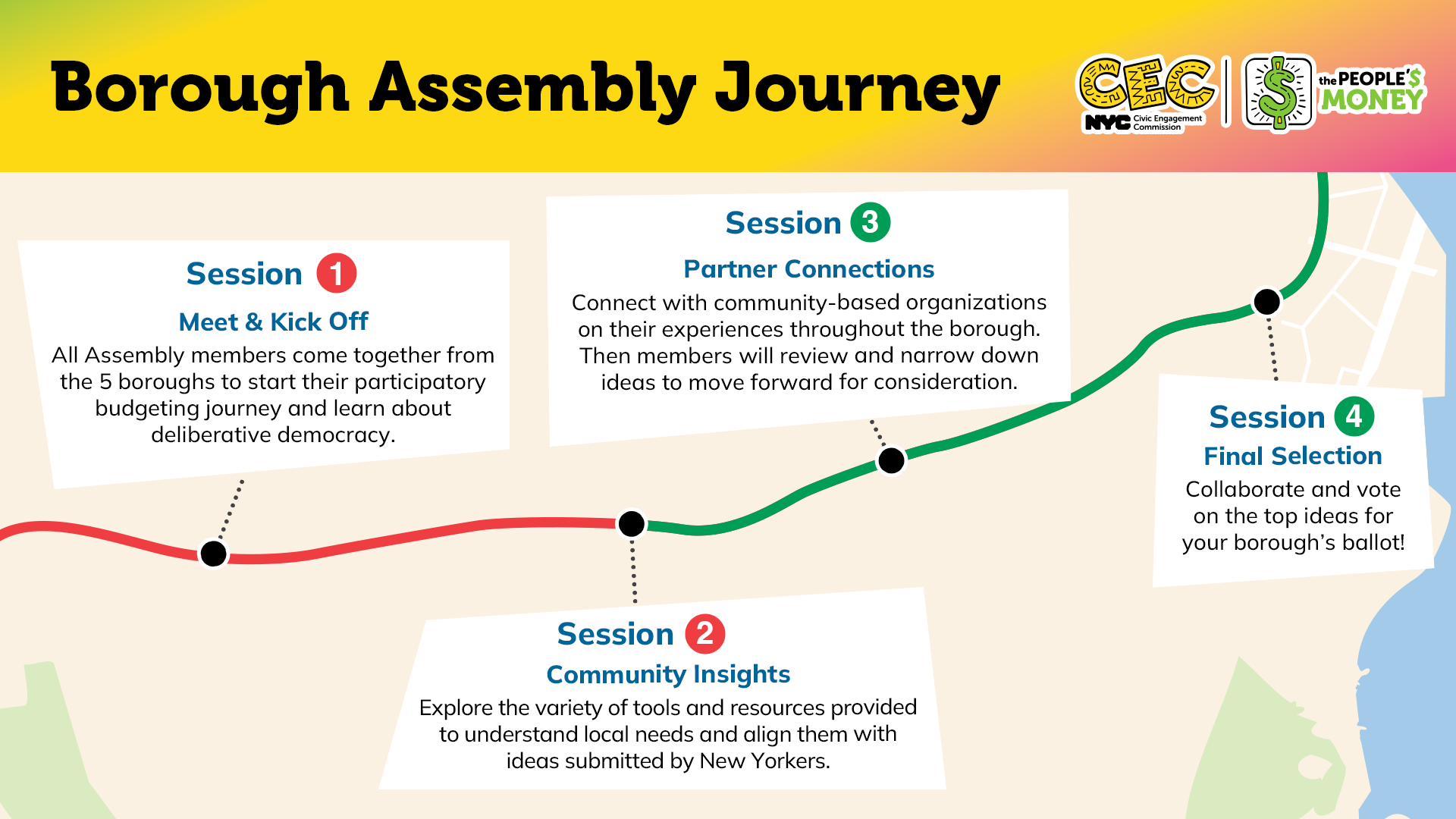
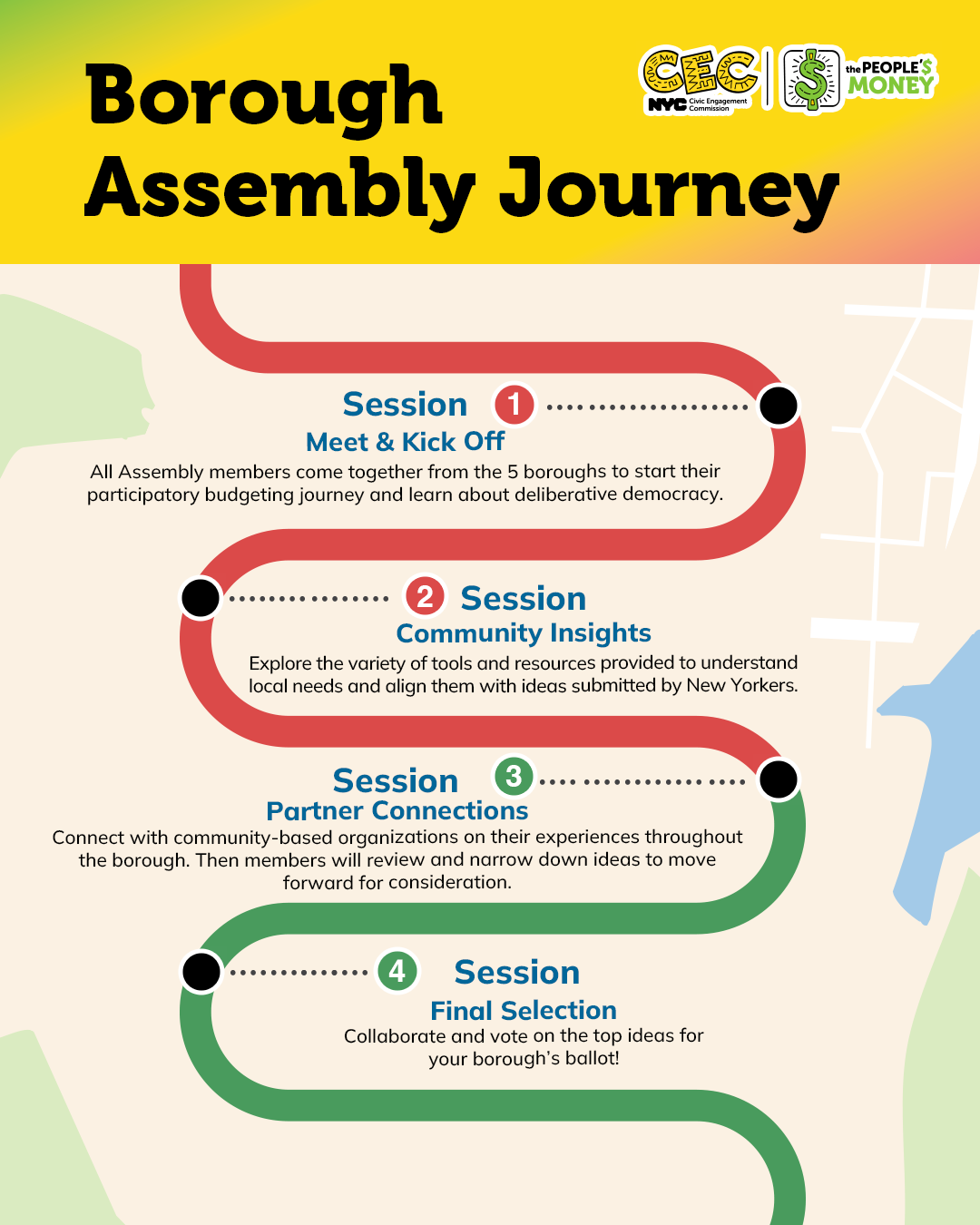
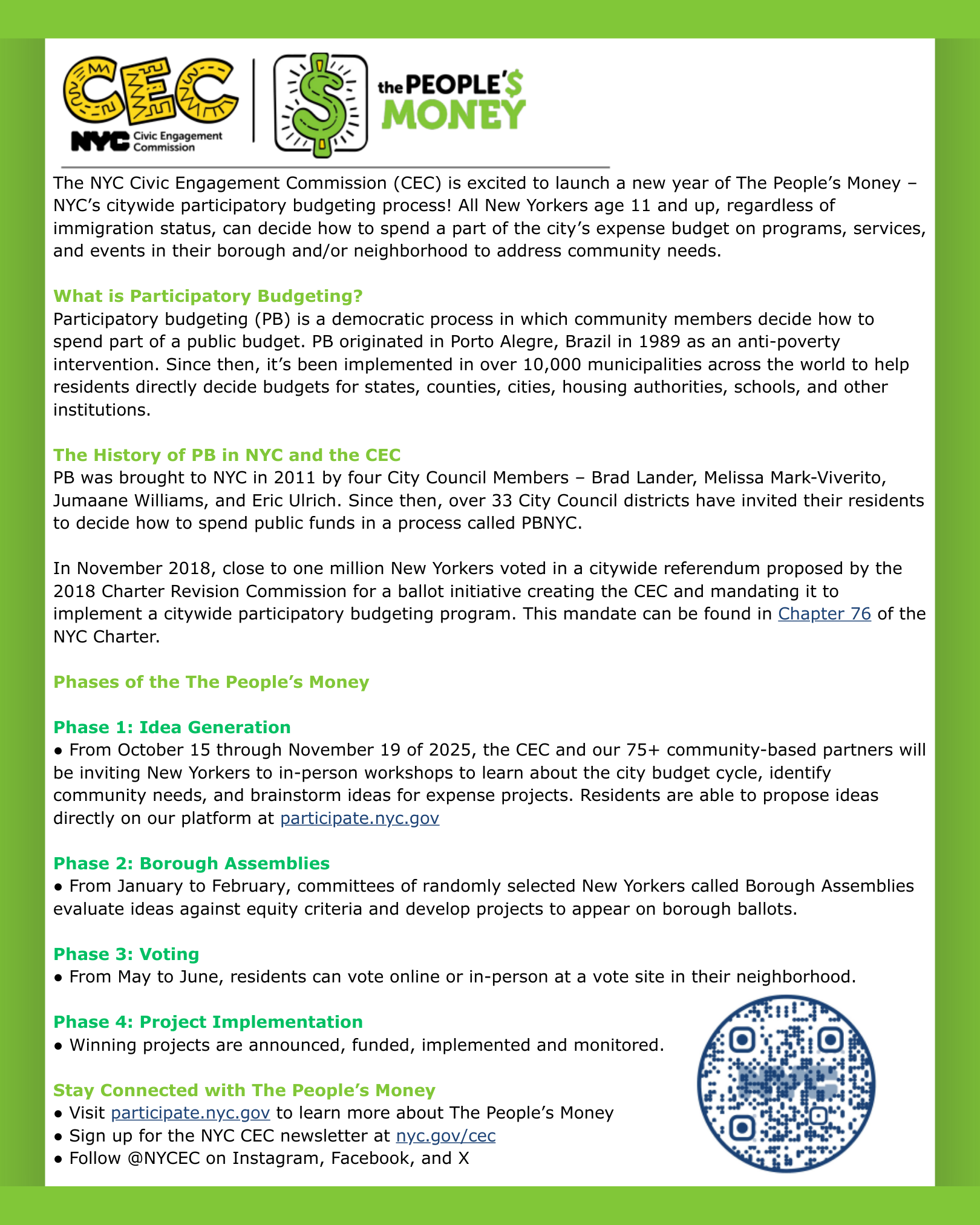
At a recent roundtable, CEC officials laid out what comes next: borough assemblies, a deliberative process that will determine which community driven ideas make it into the citywide ballot later this year.
Assemblies are led by trained facilitators, and members will hear from city agencies and community based partners, nonprofits working with the CEC throughout each phase, while bringing their own lived experience into the room.
“This program is about more than participation,” CEC leadership emphasized. “It is about strengthening democracy itself and rebuilding civic trust.”
From Ideas to Power
The process begins where the government often fails to start: with listening.
Last fall, hundreds of idea generation sessions were held across the city, inviting New Yorkers to propose solutions they want to see in their neighborhoods from mental health programs to job training, senior services, food security, and public safety initiatives.
Now comes the pivotal step.
Randomly selected residents 25 per borough, chosen from more than 1,100 applicants, will convene in borough assemblies to deliberate, refine, and ultimately decide which proposals advance to the ballot. These participants are chosen through a demographic based random selection process designed to reflect each borough’s age, income, housing status, education level, and language diversity.
This is not symbolic engagement. These assemblies will determine which ten projects per borough move forward for a citywide public vote.
A Different Model of Democracy
Participatory budgeting is not new. It began decades ago in Brazil and has since appeared in cities around the world. What makes New York’s approach distinct is its scale and its structure.
Rather than relying on self-selected volunteers or repeat participants, the city blends participatory budgeting with civic assemblies, a model used internationally to tackle complex policy questions. Once selected, assembly members serve only once, ensuring fresh voices every year.
“We trust that residents’ lived experience gives them unique insight into what their communities truly need,” officials said.
The stakes are real. This year, $4 million in city funds will be allocated through the program, down from $5 million in its first year, following pandemic era budget cuts, but up from prior reductions. City officials expressed hope that funding will continue to grow.
Designed for Deliberation
Based on participant feedback from previous cycles, the CEC made notable changes this year.
Instead of short weekday sessions, assemblies will now meet over four extended weekend sessions, each lasting about five hours. The shift reflects a surprising trend: participants wanted more uninterrupted time to deliberate, collaborate, and build trust with one another.
Assembly members are compensated for their time, provided meals, and offered interpretation services. This year, interpretation includes Spanish, Bengali, Mandarin, Cantonese, and additional languages, reinforcing the program’s commitment to accessibility.
Youth participation is also expanding. While voting is open to anyone 11 and older, assembly members have included teenagers and in this cycle, two high schooled aged participants.
Rebuilding Trust One Table at a Time
Members of the CEC leadership were candid about the deeper purpose behind the initiative.
Too often, they noted, civic engagement fails for predictable reasons: people don’t know the table exists, or they show up and feel unheard. Sometimes, it is the same voices dominating the conversation year after year.
This process is designed to change that.
By creating a structured, inclusive, and consequential decision making space, The People’s Money aims to close the gap between lived experience and government action, transforming engagement from performance into power.
“This is not just about increasing turnout,” one official said. “It is about improving the quality of interaction between New Yorkers and their government.”
What Comes Next
The borough assemblies begin this weekend, with a citywide launch event at New York University bringing all assembly members together for the first time. From there, deliberations will continue through late February, culminating in a ballot that reflects the collective priorities of New Yorkers themselves.
As projects from last year’s vote are funded and implemented, the cycle continues proof that participatory democracy doesn’t end at the ballot box.
For CEC officials, the message is clear: democracy works best when people are trusted to shape it.
The CEC is also charged with strengthening civic participation citywide, particularly by expanding language access and voter support, so New Yorkers can participate fully, regardless of the language they speak at home. Read more about those efforts here.
For more information on the New York City Civic Engagement Commission and The People’s Money, please visit here.