


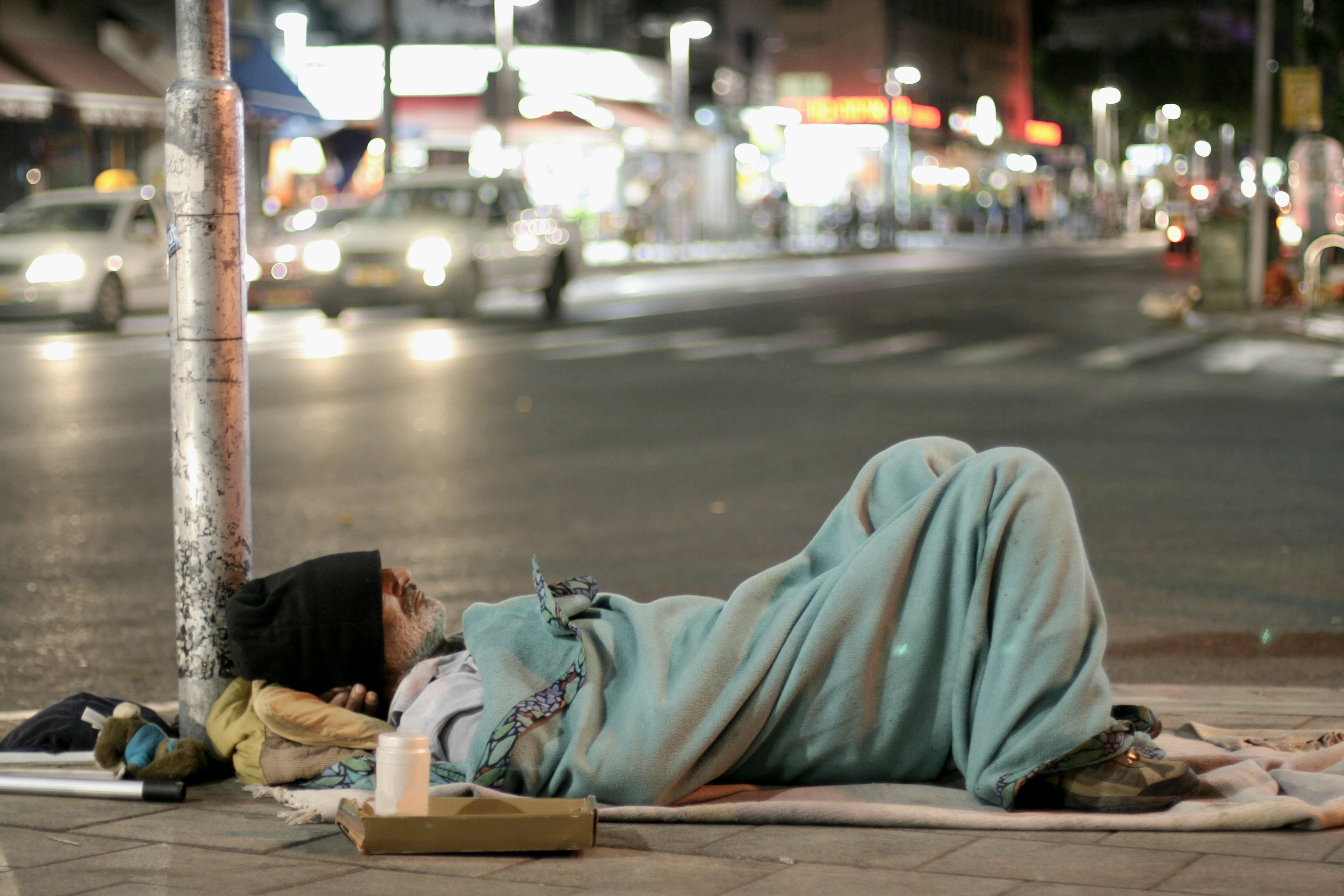


A two hundred square foot camp with a plywood bed sitting steps from City Hall for 6 weeks is not an accident of logistics. It is the direct result of idiotic policy. Under the rules the city of New York currently follows, authorities do not forcibly clear sidewalks, and the seven-day outreach clock restarts every time a person simply moves their belongings a short distance. The system is functioning exactly as written. The public is left to live with the consequences.
Mark Roggemann, 50, has maintained a roughly two hundred square foot encampment on the Centre Street sidewalk for approximately six weeks. The location sits across from the Brooklyn Bridge entrance and only steps from City Hall. The camp includes a plywood bed, a clothing rack, fake potted plants, and storage bins. It is not a temporary overnight presence. It is a semi permanent outdoor residence placed in one of the most visible and symbolically important public spaces in the city.
The Department of Homeless Services posted a cleanup notice on November 6, 2026. On Thursday, Roggemann moved his belongings about 35 yards north. That short relocation restarted the city’s seven-day engagement process. Workers therefore could not clear the site on Friday. Councilwoman Joann Ariola observed that a thirty five yard move is all it takes to reset the city’s clock. The policy creates a permanent loophole. As long as the individual shifts possessions a modest distance before the clock expires, the process begins again. The sidewalk remains occupied. The public remains obstructed. The city remains powerless under its own rules.
Roggemann stated he possesses a city funded apartment in Brooklyn but left it because of the heat. That claim deserves scrutiny. Taxpayers fund shelter and housing options. When a recipient abandons that housing and returns to a high profile sidewalk camp, the policy response is not rapid enforcement. The response is another round of outreach and another restarted clock. The result is predictable. Visible disorder continues in the shadow of City Hall.
Policy Designed For Permanent Disorder
Mayor Zohran Mamdani’s approach to street homelessness prioritizes process over public order. The city does not forcibly clear sidewalks. Social workers must complete a seven day outreach sequence before any cleanup can occur. That sequence resets when belongings are moved. The design guarantees that determined individuals can maintain long term presence in public spaces by performing minimal relocation. The rules do not fail. They succeed at producing exactly the outcome observers now see.
An estimated five thousand people live on the city’s streets. Many suffer from severe mental illness, addiction, or both. Compassionate and effective policy would combine outreach with clear enforcement of basic public order. It would protect the severely impaired by moving them into treatment and structured care. It would also protect the broader public’s right to use sidewalks, parks, and plazas without navigating semi permanent camps. The current framework does neither. It extends the seven day clock, restarts it upon movement, and leaves the sidewalks occupied.
This is not a shortage of resources. New York City spends billions on homelessness services. The failure is one of design and political will. Progressive ideology treats street camping as an expression of personal autonomy that government must accommodate rather than a public disorder that government must resolve. The plywood bed near City Hall is the logical endpoint of that ideology.
The Cost To Public Space & Civic Dignity
Sidewalks exist for public passage. They are not available real estate for private outdoor living rooms. When a two hundred square foot camp with furniture and decorative plants occupies a high traffic corridor near City Hall for weeks, the city signals that public space is negotiable. Tourists, workers, and residents encounter the message every day. The message is that basic standards of order no longer apply in the municipal core.
The presence of such a camp steps from the seat of city government is particularly corrosive. City Hall is supposed to represent authority, competence, and the rule of law. A long term sidewalk residence maintained through policy loopholes demonstrates the opposite. It shows that the rules themselves prevent the restoration of order. Councilwoman Ariola’s observation about the thirty five yard reset captures the absurdity. The system rewards minimal compliance with indefinite occupation.
Taxpayers fund both the outreach apparatus and the housing options that some individuals reject. When a person leaves a city funded apartment citing heat and returns to a high profile sidewalk camp, the public absorbs the cost twice. First in housing expenditure. Second in the continued degradation of shared public space. The policy offers no effective mechanism to break that cycle.
Broader Pattern Under Progressive Governance
This single camp is not an isolated failure. It is consistent with a larger pattern visible across progressive governed cities. Enforcement is subordinated to process. Process is designed to be easily restarted. Visible disorder is tolerated as the price of ideological purity. The result is the same from San Francisco to Seattle to New York. Street camping expands. Public frustration grows. Trust in municipal competence declines.
Mamdani’s administration inherited serious homelessness challenges. It has chosen to respond with rules that make sustained clearance difficult. The seven day clock and the movement reset are not minor administrative details. They are the operational core of a policy that prioritizes the continued presence of camps over the restoration of public sidewalks. When the rules work as written, plywood beds appear near City Hall.
Common sense alternatives exist. Other jurisdictions have demonstrated that combining available shelter with clear, consistent enforcement of anti camping laws reduces street disorder. Outreach remains available. Treatment remains available. The difference is that public space is not indefinitely conceded. New York under the current framework has rejected that approach. The Centre Street camp is the evidence.
The Human & Civic Failure
Street homelessness involves profound human suffering. Many individuals living outdoors face addiction, untreated mental illness, and deep social isolation. Effective policy must address those realities with treatment, accountability, and structured care. It must also protect the public’s right to safe and usable streets. The current New York approach fails on both fronts. It neither moves the most impaired into care with sufficient urgency nor restores the sidewalks to public use.
Roggemann’s six week presence with a plywood bed and decorative plants illustrates the gap. The city posted a notice. He moved thirty five yards. The clock restarted. The camp continued. That sequence can repeat indefinitely under the rules as written. The public is told this represents compassion. In practice it represents the abandonment of both the individual and the shared civic environment.
New Yorkers have a right to expect that their government will maintain basic order in the most visible public spaces. A semi permanent camp steps from City Hall for six weeks, maintained through a policy loophole, fails that test. The rules are not broken. They are working exactly as designed. The results are visible to anyone walking down Centre Street.
The solution begins with rewriting the rules. End the automatic reset for short distance moves. Restore the authority to clear sidewalks after reasonable notice. Pair enforcement with genuine treatment capacity. Until those changes occur, the plywood beds will remain, the clocks will restart, and the sidewalks near City Hall will continue to host long term camps. The policy produces the outcome. The public lives with it.
Featured image credit: DepositPhotos.com