

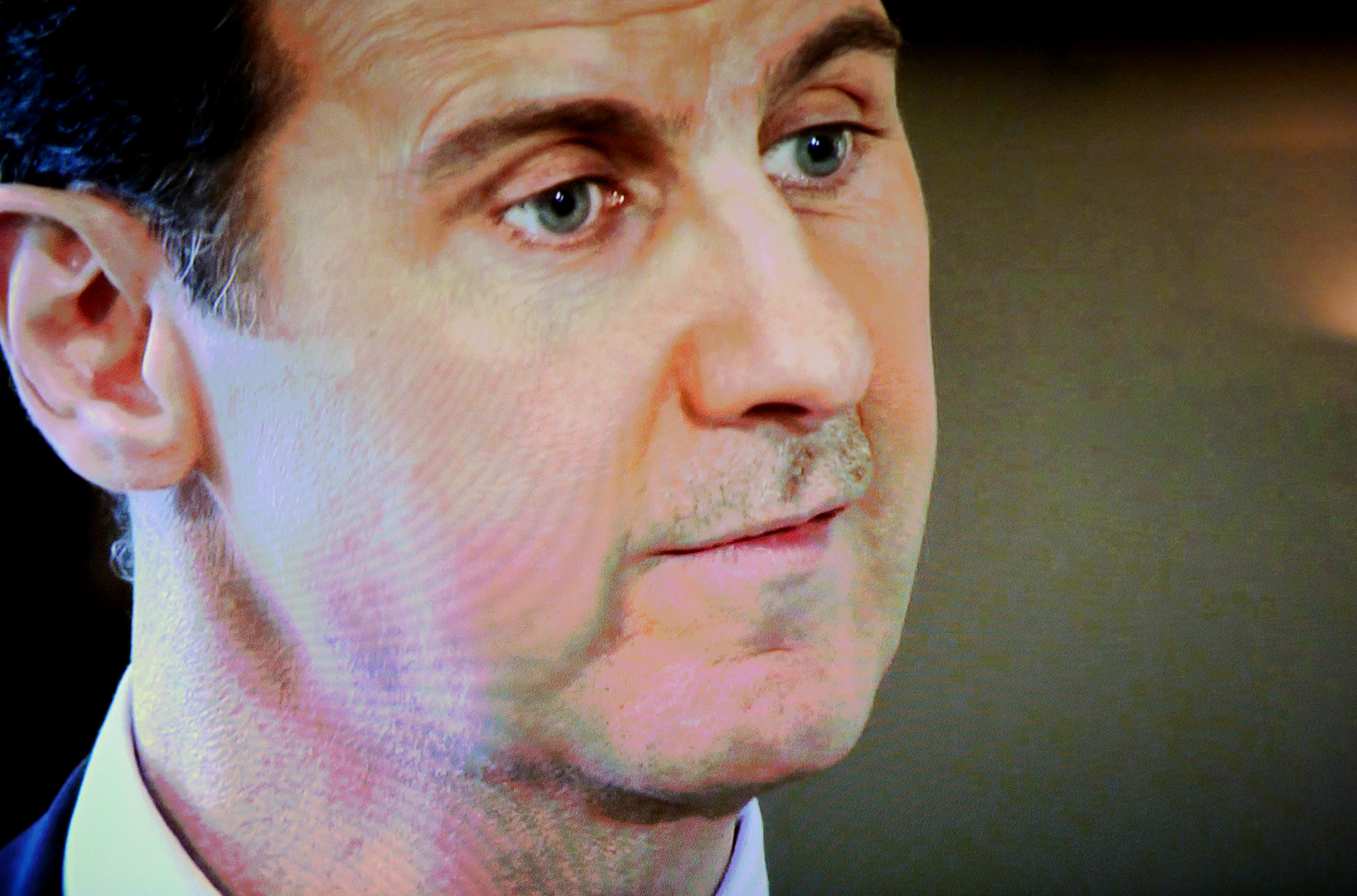


A Damascus court has delivered a long-overdue verdict against one of the most brutal dictators of the modern era. The Fourth Criminal Court sentenced former Syrian President Bashar al-Assad to death after convicting him of murder, torture, and crimes against humanity. His brother Maher al-Assad received the same sentence in absentia. Former security official Atef Najib, tried in person, was also condemned to death. The court ordered that Bashar and Maher al-Assad be pursued internationally.
This is the first formal conviction against Bashar al-Assad himself. After more than two decades of iron-fisted rule and a civil war that claimed hundreds of thousands of lives, a Syrian court has finally named the man at the top of the killing machine and declared him guilty. Justice delayed is still justice, and the blood of Syrian civilians, including children, demands nothing less.
The Crimes And The Verdict
The court found Assad guilty of premeditated and intentional murder of multiple people, including children under the age of fifteen, as well as torture, arbitrary detention, and crimes against humanity. The same charges, with variations, applied to his brother Maher, who commanded the elite Fourth Division responsible for some of the regime’s most notorious operations, and to Atef Najib, a maternal cousin who headed political security in Daraa province when the uprising began in 2011.
Najib stood in a cage inside the courtroom wearing a prison uniform as the judge read the sentence. Assad and his brother remain in Russia, where they fled in December 2024 as rebel forces advanced on Damascus and ended five decades of Assad family rule. The new Syrian authorities have detained numerous lower-level officials, but the most senior figures, including the former president, remain beyond reach for now. The court’s order for international pursuit makes clear that exile in Moscow does not equal immunity.
The Syrian civil war began with peaceful protests in 2011. The Assad regime answered with live ammunition, mass arrests, systematic torture in detention centers, barrel bombs, and chemical weapons. Hundreds of thousands died. Millions were displaced. Entire cities were reduced to rubble. The regime’s alliance with Iran and reliance on Hezbollah and Russian air power prolonged the slaughter. Bashar al-Assad did not merely preside over these crimes. He directed the state apparatus that carried them out.
A Dictator Who Chose Blood Over Reform
Bashar al-Assad inherited power from his father Hafez in 2000. Western governments initially hoped the London-trained ophthalmologist might prove a reformer. Those hopes collapsed the moment protests began. Rather than allow political opening, Assad unleashed the security services and the military. Daraa, where Najib operated, became an early symbol of the regime’s determination to crush dissent by any means necessary. From there the violence spread nationwide.
Throughout the war Assad portrayed himself as a bulwark against Islamist extremism while his forces committed atrocities that radicalized the opposition and created the conditions in which groups like ISIS thrived. He remained a loyal ally of the Iranian regime and a consistent enemy of Israel and the United States. American and Israeli interests suffered under his rule. The Iranian axis used Syrian territory as a land bridge to arm Hezbollah and threaten the Jewish state. The human cost inside Syria was catastrophic.
The fall of the Assad regime in December 2024 ended that chapter. The new authorities under President Ahmed al-Sharaa have begun the difficult work of accountability. This death sentence represents the most significant step yet. It places the former president on the same legal footing as the underlings who carried out his orders. No one is above the law when the evidence of mass murder and torture is this extensive.
Justice, Accountability, And American Interests
From an American perspective this verdict is welcome. The United States spent years watching the Assad regime murder its own people while receiving support from Tehran and Moscow. Sanctions, limited strikes after chemical attacks, and diplomatic isolation never removed the dictator. Only the collapse of his military position forced him to flee. Now a Syrian court has spoken. The sentence cannot be carried out while Assad remains under Russian protection, yet the formal judgment matters. It establishes a legal record. It signals that the age of impunity for the Assad family is over.
Conservatives have long argued that strength and clarity, not endless negotiation with tyrants, serve American interests. The Assad regime was never a partner for stability. It was a sponsor of terrorism against Israel, a client of the Iranian theocracy, and a practitioner of industrial-scale repression. Its demise removed a key node in the axis of resistance. Holding its leaders accountable reinforces the principle that mass murderers eventually face consequences.
The presence of Islamist elements in the new Syrian government raises legitimate concerns about the future direction of the country. Those concerns should not obscure the reality of what Assad did. Torture chambers, chemical attacks, and the deliberate targeting of civilians are not the products of Western propaganda. They are documented facts. A court in Damascus has now affirmed them under Syrian law.
The Limits Of Exile
Assad lives in Moscow under the protection of Vladimir Putin. Russia provided the air power that kept him in power for years and now provides sanctuary. That arrangement may shield him from immediate arrest, but it does not erase the verdict. International pursuit orders create legal and diplomatic pressure. Future governments in Russia or elsewhere may recalculate the costs of hosting a convicted war criminal. History is filled with dictators who believed exile equaled safety only to discover otherwise.
Maher al-Assad, long known as the enforcer of the family’s most ruthless policies, shares the same fate. Najib, the man who helped ignite the war through the crackdown in Daraa, faces the sentence in person. These three names represent the core of the old regime’s security apparatus. Their convictions close one chapter of a long and bloody story.
A Necessary Verdict
The death sentence against Bashar al-Assad will not restore the lives lost or rebuild the cities destroyed. It will not heal the trauma of the millions who fled or the families who still search for the disappeared. What it does is declare, under the authority of a Syrian court, that the man who ordered the slaughter is a criminal and that the penalty for his crimes is death. That declaration has moral and legal force.
Americans who value ordered liberty, the sanctity of innocent life, and the defeat of regimes that ally with America’s enemies should recognize this moment. A dictator who gassed his own people, tortured children, and served as a proxy for Iran has been formally judged. The sentence may never be executed while he remains in Russia. The judgment itself stands. History will record that Bashar al-Assad was not merely driven from power. He was convicted of the crimes that defined his rule.
The Fourth Criminal Court in Damascus has done what years of international talk failed to accomplish. It named the guilty and imposed the ultimate penalty. For the victims of the Assad regime, that is a measure of justice long denied and finally delivered.
Featured image credit: DepositPhotos.com