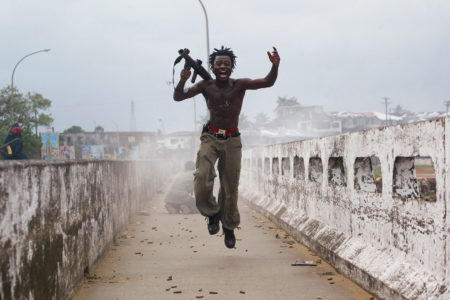





Independent filmmaking often succeeds precisely because it is willing to tell stories that larger productions might overlook. The Veteran, directed by Wilfred La Salle, is a strong example of that approach. Set against the streets, neighborhoods, military grounds, and recognizable landscapes of New York City, the 2026 drama takes on difficult subjects involving military service, grief, addiction, homelessness, mental health, and the long road toward rebuilding a life.
At its center is Jose Torres, a U.S. Marine returning home from deployment with hopes of reuniting with his wife and young son. What follows is a devastating chain of events that changes the direction of his life and ultimately leaves him confronting addiction, homelessness, isolation, and the consequences of trauma.
What makes The Veteran particularly effective is that it does not treat its central character simply as a symbol of a social problem. Jose is presented as a human being whose life has been transformed by circumstances, personal loss, injury, and decisions made during an increasingly difficult period. That human focus gives the film much of its emotional weight.
A Story Built Around A Difficult Homecoming
The idea of coming home after military service is often associated with reunion and relief. The Veteran explores what happens when that expected return to normal life is interrupted by tragedy.
Jose initially comes home prepared to resume his role as husband and father. His hopes for a new chapter are shattered when a tragic automobile accident claims the lives of his wife and young son. The loss becomes the turning point in his life, sending him into a downward spiral from which recovery becomes increasingly difficult.
The film connects that personal tragedy with the physical and psychological consequences of military service. Jose suffers a serious back injury during his deployment and is prescribed opioids for pain. His subsequent dependence becomes another major obstacle, eventually contributing to his separation from the military and his descent into homelessness.
Rather than presenting these developments as isolated events, the film builds them into a chain of circumstances. Injury leads to medication. Medication becomes addiction. Addiction contributes to isolation. Personal tragedy compounds the situation. The loss of stability eventually leaves Jose without the structure that once defined his life.
That progression gives the story a strong sense of cause and consequence.
Yanko Valentin-Perez Brings Authenticity To Jose Torres
Yanko Valentin-Perez carries the central role of Jose Torres, and his presence is one of the film’s important strengths.
The performance requires a substantial emotional range. Jose is not simply a soldier in combat scenes or a homeless man in later sequences. The audience sees him at different stages of his life, including as a Marine, husband, father, injured veteran, grieving individual, and eventually a man struggling to regain control of his life.
Valentin-Perez also brings an unusual degree of authenticity to the military dimension of the production. His own military background informs his portrayal and helps ground the character in experiences that could otherwise be difficult for an actor to reproduce convincingly.
That authenticity matters because the film depends on the contrast between Jose before and after his life falls apart. The stronger the sense of who Jose once was, the more meaningful his later struggle becomes.
Brooklyn Becomes More Than A Filming Location
One of the most appealing aspects of The Veteran is its use of Brooklyn and other New York City locations.
The production makes substantial use of Crown Heights, Bushwick, Floyd Bennett Field, Fort Tilden, and Fort Totten, while additional filming took place in the Bronx and Westchester. The result is a film that feels connected to the city rather than one that simply happens to have been filmed there.
Floyd Bennett Field and the former military grounds at Fort Tilden and Fort Totten provide especially effective settings for the military sequences. These locations give the film a visual connection to New York City’s military history while providing a distinctive backdrop for its combat-related scenes.
The neighborhood locations serve a different purpose. They place Jose’s post-service struggles within recognizable urban environments and help reinforce the contrast between the life he hoped to return to and the circumstances in which he ultimately finds himself.
For viewers familiar with Brooklyn and NYC, these locations add another layer of interest. The city becomes part of the story’s identity.
The Film’s Treatment Of Homelessness Is Human-Centered
Perhaps the most important quality of The Veteran is its refusal to reduce homelessness to a simple stereotype.
Jose’s circumstances are complicated. He is educated, formerly employed, trained as a Marine, and once had a family and a clear sense of purpose. His homelessness is the result of an accumulation of devastating circumstances rather than a single defining characteristic.
That perspective gives the film an important human dimension.
The story asks audiences to look beyond appearances and consider the person behind the circumstances. Jose is not defined exclusively by where he sleeps, his addiction, or the mistakes he makes. He remains a person with memories, relationships, abilities, and the possibility of rebuilding his life.
This is also where the character of Maxwell Cade becomes important.
Maxwell Cade And The Power Of Compassion
Lancelot E. Theobald Jr. plays Maxwell Cade, a successful CEO whose path eventually crosses with Jose.
The relationship between the two men provides the film with its central element of hope. Cade sees something in Jose that others have overlooked. Instead of treating him simply as another homeless person, he recognizes the individual behind the circumstances.
That relationship gives The Veteran an important counterbalance to its darker material.
The film spends considerable time examining how quickly a person’s life can unravel, but it also demonstrates how one meaningful relationship can begin the process of rebuilding. Cade does not erase Jose’s problems. Instead, his involvement provides Jose with an opportunity to begin confronting them.
That distinction makes the story more convincing. Redemption is not presented as something that happens instantly. It is connected to trust, responsibility, opportunity, and the willingness to accept help.
Addiction Is Presented As Part Of A Larger Story
Another strength of The Veteran is the way it places opioid addiction within the broader circumstances of Jose’s life.
The film does not treat addiction as the entire story. Jose’s dependence develops alongside injury, grief, guilt, military separation, and the loss of his family.
That context makes his struggle more complicated and more emotionally involving.
The opioid crisis has affected communities across the United States, and veterans have faced their own challenges involving pain management, mental health, reintegration into civilian life, and access to appropriate support. By placing those issues inside the story of one individual, The Veteran gives viewers a personal entry point into subjects that can otherwise seem distant or abstract.
An Independent Film With A Clear Sense Of Purpose
There is also something admirable about the scale and ambition of the production itself.
Wilfred La Salle has built his filmmaking career outside the traditional Hollywood studio system, developing feature films through La Salle Productions. The Veteran reflects that independent approach. It is clearly driven by the desire to tell a particular story rather than by the requirements of a major studio franchise or commercial formula.
That independence gives the movie a distinctive personality.
The production also demonstrates what can be accomplished when filmmakers make extensive use of locations and local talent. Brooklyn is not merely a generic urban backdrop. It is woven into the visual identity of the film.
The result is a production with a distinctly New York character.
A Film About Second Chances
Ultimately, The Veteran is a film about how quickly a life can change and how difficult, but possible, it can be to change direction again.
Jose’s journey takes him from military service and family life to injury, grief, addiction, homelessness, and eventually the possibility of redemption. The story is painful at times, but it is not without hope.
That balance is important.
A film dealing with veteran homelessness and addiction could easily become relentlessly bleak. The Veteran instead uses its darker material to establish the importance of compassion, human connection, and second chances.
Its message is particularly relevant because the challenges faced by veterans do not necessarily end when military service ends. Returning home can represent the beginning of another difficult chapter, particularly for those dealing with physical injuries, psychological trauma, addiction, financial instability, or the loss of family support.
By focusing on one man’s experience, the film makes those issues personal.
The New York City Setting Gives The Film A Distinct Identity
The decision to film extensively throughout Brooklyn and other parts of the New York City region ultimately pays off.
From Crown Heights and Bushwick to Floyd Bennett Field, Fort Tilden, and Fort Totten, the locations contribute substantially to the atmosphere. The combination of neighborhood streets, residential interiors, military landscapes, and urban environments gives the movie visual variety while maintaining a consistent sense of place.
For local audiences, there is an additional pleasure in recognizing familiar parts of Brooklyn and NYC.
The production demonstrates that independent filmmakers do not need to leave New York City to create a cinematic world. The city already provides an enormous range of environments capable of supporting stories that are intimate, dramatic, and visually ambitious.
A Worthwhile Addition To Independent American Cinema
The Veteran is ultimately a sincere and ambitious independent drama that deserves attention for the story it chooses to tell and the determination behind its production.
Its strongest qualities are its human-centered approach, its New York City setting, the authenticity brought to the central military character, and its willingness to explore difficult subjects without losing sight of hope.
The film does not offer a simple solution to veteran homelessness, addiction, or the challenges of returning to civilian life. Instead, it tells the story of one man whose life is nearly destroyed by a combination of trauma, injury, grief, and addiction, and then explores what happens when someone finally sees the person behind the circumstances.
That makes The Veteran more than a war drama. It is a story about what happens after the fighting ends.
It is a story about loss, resilience, compassion, and the possibility of rebuilding.
For audiences interested in independent films, veteran stories, New York City productions, and dramas dealing with real-world social issues, The Veteran offers a compelling viewing experience. Its strongest achievement may be its insistence that even someone who appears to have lost everything can still have a story worth hearing and a future worth fighting for.
The Veteran is currently available to stream on platforms including Tubi, Prime Video, and FOX Soul.
About Wilfred La Salle
Wilfred La Salle is the kind of filmmaker whose career is almost as unconventional as the films he creates. Bronx-born and raised, La Salle spent 18 years working for the City of New York, including as an NYPD School Safety Agent and later as a New York City Correctional Officer, before making the difficult decision to leave that career and pursue filmmaking full time.
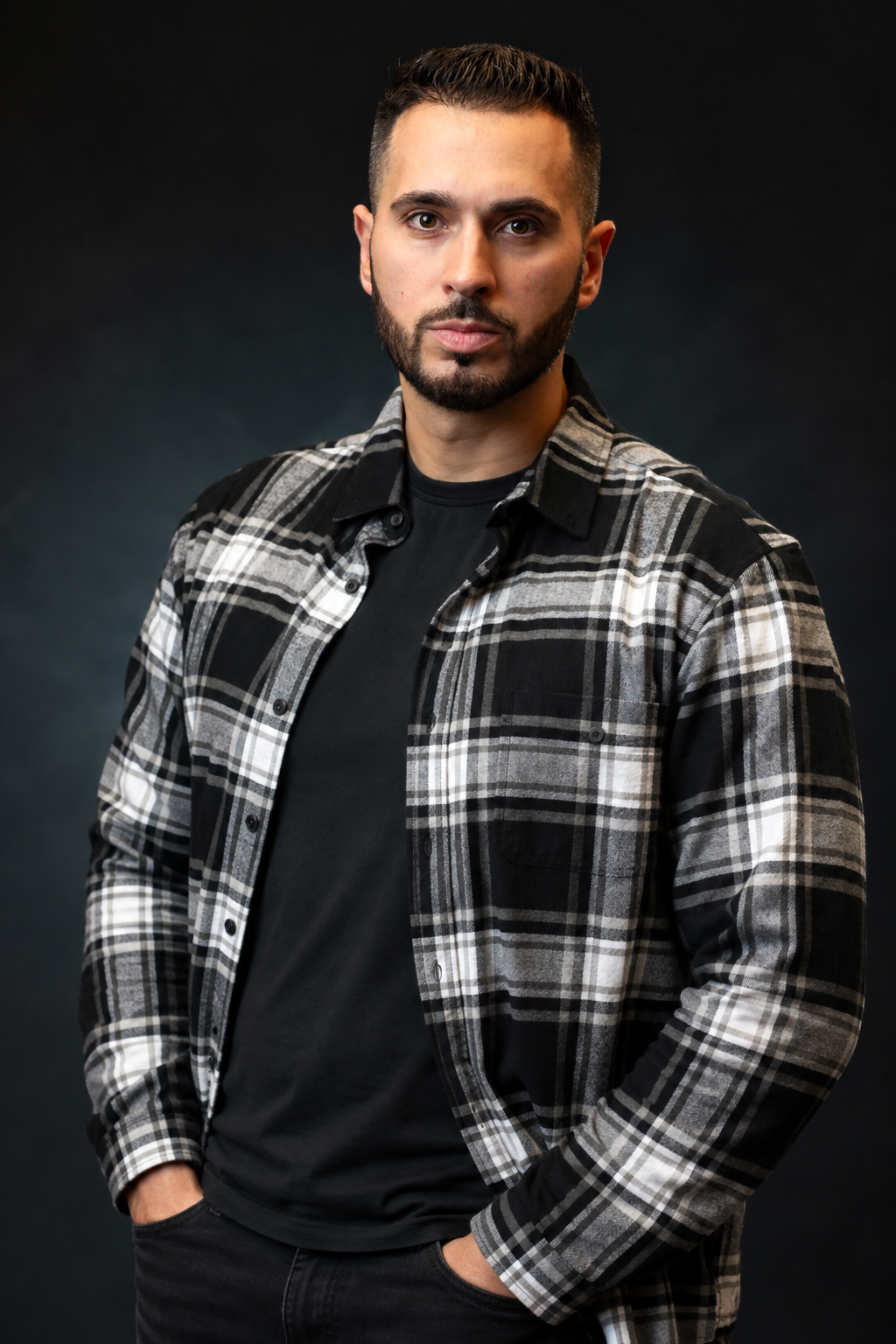
Unlike filmmakers who enter the industry through film school, major studios, or established production companies, La Salle largely taught himself the craft. When he began making films, he purchased his own camera equipment and learned how to operate it and edit footage through hands-on experience and online tutorials. He subsequently developed an extraordinary independent production model, writing, directing, producing, and financing his own feature films through La Salle Productions.
That determination has translated into a remarkably consistent body of work. The Veteran is La Salle’s seventh feature film, following Hilo, Hilo II, Graves, Hilo 3, Oculus, and The Security Guard. His earlier work has also received recognition at international film festivals, including awards for Hilo II at the Vesuvius International Film Festival in Italy and the Madras International Film Festival.
What distinguishes La Salle particularly well is his commitment to telling stories outside the conventional Hollywood system. His productions have provided opportunities for actors and other emerging talent while allowing him to maintain control over the stories he wants to tell. His approach is especially evident in The Veteran, where his interest in veterans, service, addiction, homelessness, and the challenges of returning to civilian life comes together in a deeply personal independent production.
La Salle’s background in public service also gives his filmmaking journey an unusual dimension. He left a stable municipal career and a path toward retirement to pursue a creative vocation that offered considerably less certainty. Seven feature films later, that decision has resulted in national media attention and distribution opportunities for his work, including the release of The Veteran through FOX Soul.
For The Veteran, La Salle also brought his commitment to authentic New York filmmaking to the screen. Brooklyn plays a major role in the movie, with scenes filmed in neighborhoods including Bushwick and Crown Heights, while military sequences were filmed at locations including Floyd Bennett Field, Fort Tilden, and Fort Totten. The locations help give the film a distinctive sense of place while connecting its story to the city and communities La Salle knows firsthand.
Perhaps most importantly, La Salle has built his filmmaking career around persistence. He did not wait for a major studio to give him an opportunity. He created his own production company, learned the necessary skills, assembled casts, found locations, financed his projects, and continued making films year after year. That independent spirit is an important part of what makes The Veteran interesting—not simply as a film about a Marine struggling after service, but as the latest achievement in an unconventional filmmaking journey.
With The Veteran, La Salle brings together his experience as a Bronx native, former New York City public servant, independent filmmaker, writer, director, and producer to tell a story centered on American veterans. The result is a film whose subject matter and production philosophy are closely aligned: both are ultimately concerned with perseverance, resilience, and the possibility of rebuilding a life after extraordinary challenges.
Featured image credit: DepositPhotos.com