

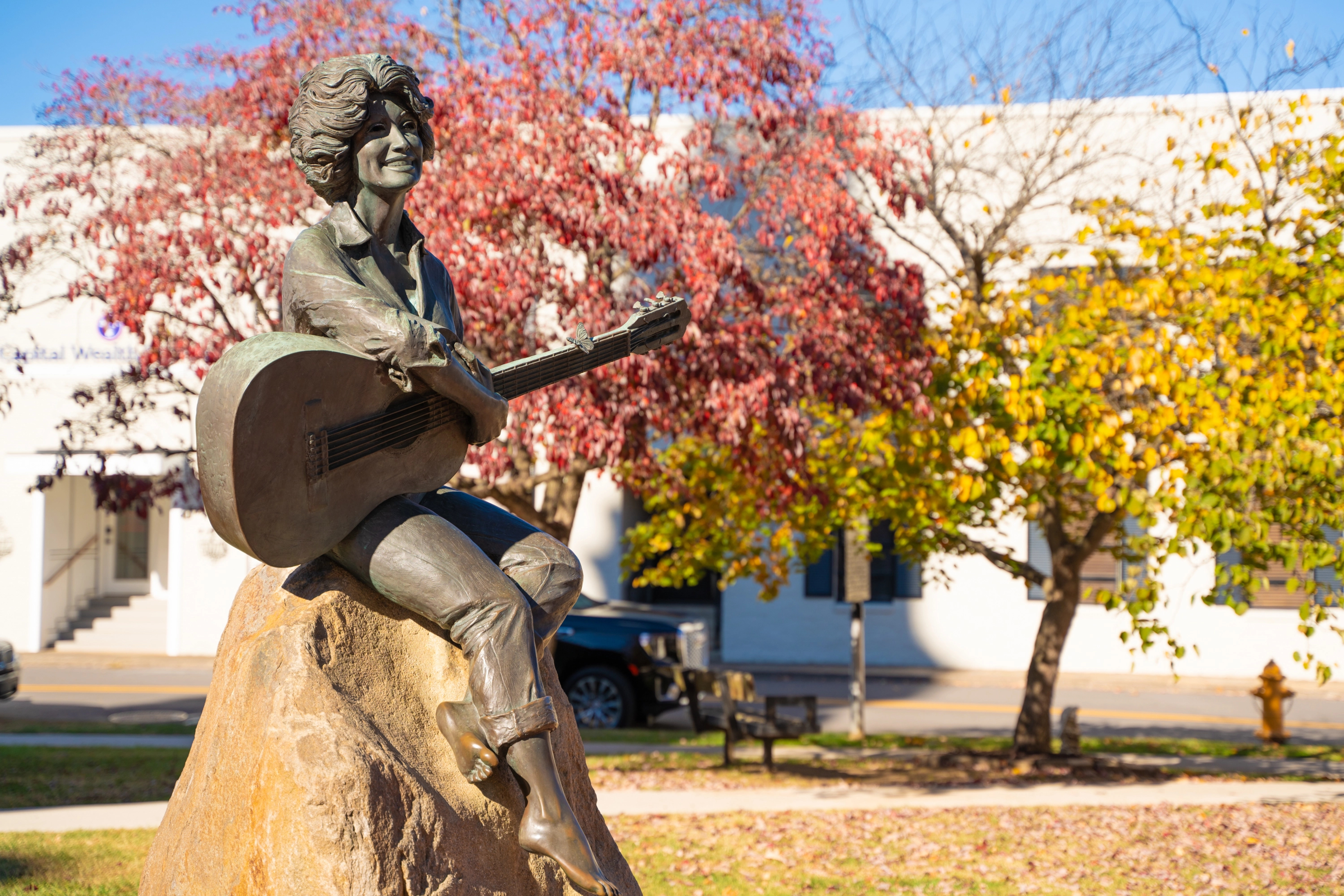


Dolly Rebecca Parton, the country music legend whose voice, songwriting, and larger-than-life persona made her one of the most beloved figures in American entertainment, died on Tuesday, August 25, 2026, at the age of 80. She passed away at the Vanderbilt-Ingram Cancer Center in Nashville after a brief battle with cancer, surrounded by loved ones. Her nephew Bryan Seaver announced the news on behalf of the family, noting that she had lived in the light and was now in the arms of Jesus, reunited with her late husband Carl Dean and her parents.
Parton’s death closes a chapter on a life that embodied the classic American story of rising from poverty through talent, relentless work, faith, and an unshakable sense of self. Born into a large family in the mountains of East Tennessee, she turned hardship into art, built a global career on her own terms, and used her success to lift others. In an age of manufactured celebrity and ideological division, she remained a unifying force whose appeal crossed political and cultural lines without ever abandoning the values that shaped her.
From The Tennessee Mountains To The World Stage
Dolly Parton was born on January 19, 1946, in a one-room cabin in Pittman Center, Tennessee, the fourth of twelve children in a family that struggled to make ends meet. Her father worked as a sharecropper and later a construction worker. Her mother filled the home with music and faith. Those early years supplied the raw material for some of her most enduring songs, including “Coat of Many Colors,” a tender account of a child wearing a patchwork coat sewn from rags and learning that love mattered more than material things.
She began performing as a child, singing on local radio and television. By her teens she had moved to Nashville with a suitcase and a determination that never wavered. In 1967 she joined Porter Wagoner’s popular television show and recording act, a partnership that brought her national exposure even as it constrained her ambitions. Parton eventually broke free, launching a solo career that produced a string of hits and established her as a songwriter of rare emotional precision and commercial power.
Songs such as “Jolene,” “I Will Always Love You,” “9 to 5,” and “Islands in the Stream” became standards. Whitney Houston’s towering version of “I Will Always Love You” introduced Parton’s writing to new generations. Her catalog sold more than 100 million records. She earned induction into the Country Music Hall of Fame, multiple Grammy Awards, and recognition as one of the most successful female country artists in history. She also proved a capable actress in films including “9 to 5,” “Steel Magnolias,” and “Rhinestone,” bringing the same warmth and comic timing that defined her public image.
Business Acumen & Enduring Independence
Parton was never content to remain only a performer. She built Dollywood into a major tourist destination in Pigeon Forge, Tennessee, creating jobs and economic opportunity in the region that raised her. She launched successful businesses, controlled her own publishing rights with unusual foresight, and maintained creative and financial independence rare among stars of her generation. That independence reflected a deep-seated belief in self-reliance. She often said she worked hard because she knew what it meant to have nothing.
Her personal life remained rooted in the same values. She married Carl Thomas Dean in 1966 in a quiet ceremony. The marriage lasted nearly six decades until Dean’s death in 2025. Parton protected their privacy with fierce consistency, rarely discussing the relationship in detail while making clear that it formed the steady center of her life. After his passing she acknowledged the toll of caregiving and grief, yet she continued working and speaking of faith as her anchor.
Philanthropy Rooted In Practical Generosity
Parton’s charitable work matched the scale of her fame. The Imagination Library, founded in 1995, has distributed hundreds of millions of free books to children from birth to age five, promoting literacy in communities across the United States and beyond. She supported education, disaster relief, and medical research. During the CoViD-19 pandemic she donated one million dollars toward vaccine development at Vanderbilt University, a contribution that drew wide notice precisely because it came without political posturing.
Her giving carried no ideological baggage. It reflected a straightforward desire to help people improve their own lives through education, opportunity, and practical assistance. In an era when philanthropy often serves as a vehicle for social signaling, Parton’s approach remained grounded in the same mountain pragmatism that shaped her music.
A Cultural Figure Who Transcended Division
Parton occupied a rare position in American life. She was instantly recognizable for the blond wigs, rhinestones, and exaggerated femininity that she treated with self-aware humor. She never pretended the image was accidental. At the same time she wrote songs of genuine emotional depth and conducted herself with a kindness that disarmed critics. Liberals claimed her as a feminist icon for songs about working women and independence. Conservatives admired her faith, work ethic, patriotism, and refusal to lecture the public from a position of cultural superiority. She accepted the admiration from both sides without surrendering her own identity.
She avoided the partisan traps that consume so many entertainers. When pressed on political matters she typically steered the conversation back to common ground, humor, or her belief that people should treat one another with basic decency. That restraint, combined with unmistakable talent, made her one of the few remaining figures capable of commanding near-universal respect.
Final Years & Lasting Example
In her later years Parton faced health challenges that forced the cancellation of a Las Vegas residency and limited public appearances. She spoke candidly about the physical toll of caring for her husband and the need to recover her own strength. Even then she projected optimism and continued creative work. A Broadway musical based on her life was in development. She remained a presence in American culture until the end.
Her death leaves a void that will not be easily filled. Country music has produced many stars, yet few combined commercial dominance, songwriting excellence, entrepreneurial success, and genuine goodwill in the same measure. Fewer still managed to do so while remaining recognizably themselves across six decades of changing tastes and cultural upheaval.
Dolly Parton leaves behind a body of work that will continue to be sung, a theme park that employs thousands, a literacy program that places books in the hands of children who might otherwise go without, and an example of what sustained effort and clear-eyed self-knowledge can achieve. She rose from a cabin in the Tennessee mountains to become a global figure without discarding the faith, manners, or common sense of her upbringing. In a fragmented age, that achievement stands as both entertainment and instruction.
She is survived by several siblings and a wide extended family. A private service will be held for those closest to her. The public mourning will continue for a long time, because the songs remain and the memory of the woman who wrote them remains larger than life.
America has lost one of its brightest and most authentic stars. The rhinestones will no longer catch the light in quite the same way. The voice that told the truth about hard times, stubborn love, and ordinary courage has fallen silent. What she built, however, endures.
Featured image credit: DepositPhotos.com