

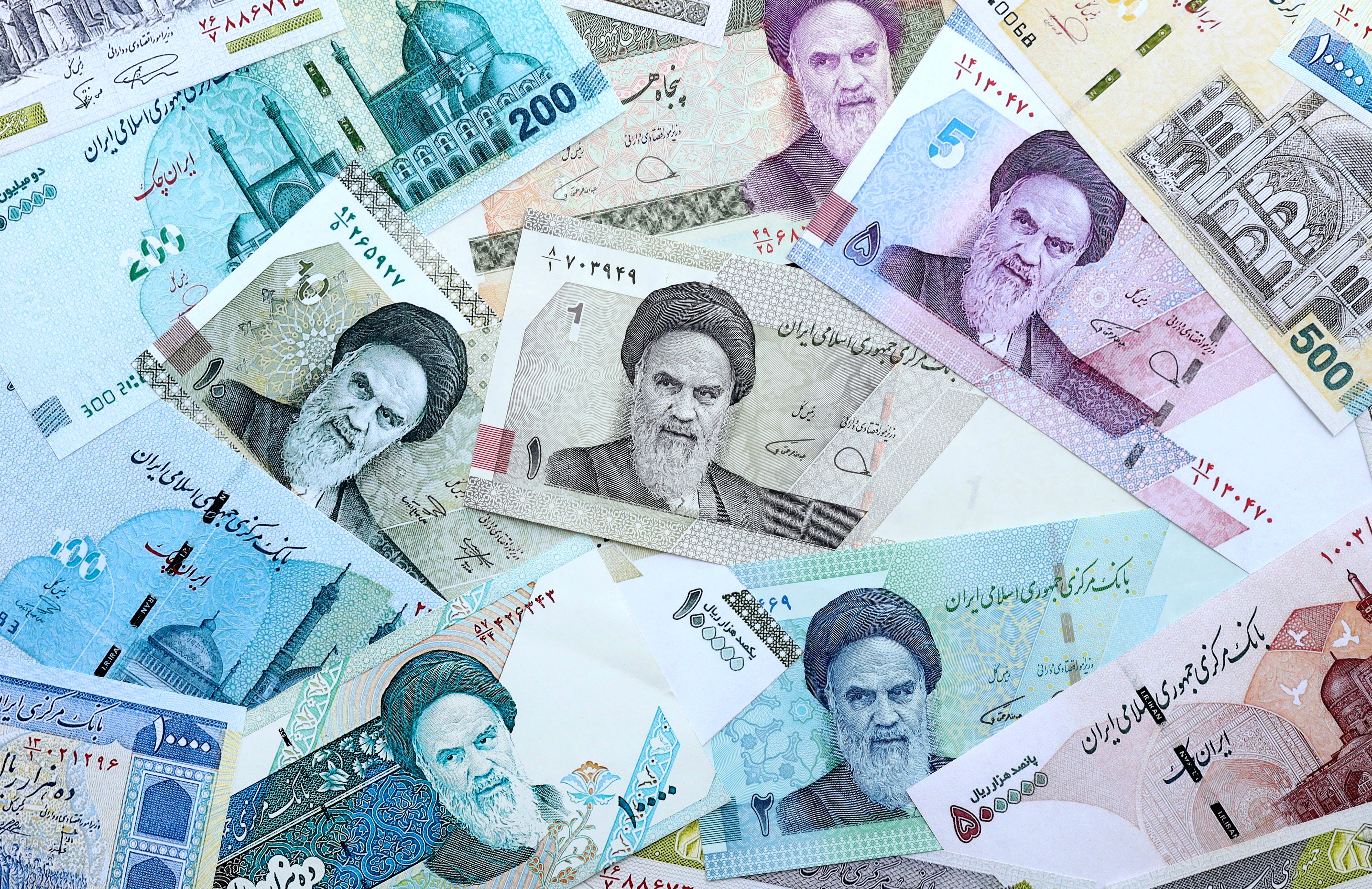


Treasury Secretary Scott Bessent announced Operation Economic Outcast, a coordinated campaign designed to isolate the Iranian regime by systematically cutting off its remaining financial channels and revenue streams. Bessent described the effort as an economic onslaught aimed at mapping and shutting down every node Iran uses to smuggle oil and evade sanctions. The operation expands secondary sanctions risk across digital assets, technology, gold, aviation, and shipping. More than 60 entities, individuals, and vessels have already been designated.
President Trump is personally contacting foreign leaders with specific requests to end dealings with the regime. Bessent warned that continued economic engagement with Tehran will bring the full reach of American power, and that the time available to comply is limited. The message is clear: the United States intends to leave the Islamic Republic with only two paths—complete global isolation or a fundamental change in behavior that allows reintegration into the legitimate world economy.
This is maximum pressure restored and intensified. It is the correct response to a regime that funds terrorism, pursues nuclear weapons, and destabilizes the Middle East through its proxies.
The Strategic Logic Of Economic Isolation
Iran’s theocratic government survives by generating hard currency through oil sales, often conducted through opaque shipping networks, front companies, and third-country facilitators. Those revenues finance the Islamic Revolutionary Guard Corps, Hezbollah, Hamas, the Houthis, and a network of militias that attack American interests, Israeli civilians, and regional stability. Cutting the money is the most effective non-military tool available.
Previous sanctions regimes achieved significant results when enforced with seriousness. When enforcement loosened, Iran reconstituted its revenue streams and expanded its malign activities. Operation Economic Outcast seeks to close the gaps. By targeting digital assets, gold, aviation, shipping, and technology, Treasury is attacking the precise sectors Iran has used to circumvent earlier measures. Mapping every node and facilitator is the necessary first step. Designating more than 60 targets on day one demonstrates that the mapping work is already advanced.
Secondary sanctions are the decisive instrument. Entities and governments that continue to enable Iranian oil smuggling or financial evasion now face explicit risk of losing access to the American financial system. That threat carries weight because the dollar remains the central currency of global trade. Few major institutions or governments can afford to be cut off from it.
Presidential Diplomacy And The Clock
President Trump’s direct outreach to foreign leaders reinforces the Treasury actions. Sanctions succeed when they are paired with clear diplomatic demands and a willingness to impose consequences. Bessent’s warning that time is limited removes the usual ambiguity that allows foreign governments to stall. The regime in Tehran and its commercial partners are being told that half-measures and symbolic gestures will not suffice.
This approach stands in contrast to years of diplomatic engagement that produced temporary freezes, unfulfilled promises, and continued Iranian aggression. The Islamic Republic has repeatedly used negotiations as a breathing space to advance its nuclear program and rearm its proxies. Economic isolation that is comprehensive and sustained removes that breathing space.
The goal is not collective punishment of the Iranian people. The goal is to deprive the regime of the resources it uses to oppress its own citizens and to export violence. A subsistence economy for the leadership in Tehran is preferable to a well-funded apparatus of terrorism and nuclear blackmail.
Why This Matters For American Interests
Iran remains the world’s leading state sponsor of terrorism. Its fingerprints appear on attacks against American forces, on the funding of groups that murder civilians, and on efforts to dominate the energy choke points of the Middle East. A nuclear-armed Iran would represent a direct threat to the United States, to Israel, and to every nation that relies on freedom of navigation through the Persian Gulf.
Economic pressure is not a substitute for military deterrence. It is a force multiplier. When the regime struggles to pay its proxies, those proxies become less capable. When oil revenue declines, the IRGC has fewer resources for missile development and cyber operations. When foreign banks and shipping companies calculate that the risk of American sanctions outweighs the profit from Iranian business, the regime’s isolation deepens.
Critics will argue that sanctions harm ordinary Iranians and that diplomacy offers a better path. History shows that the regime prioritizes its revolutionary ideology and its external adventures over the welfare of its population. Relief from pressure has consistently been converted into greater repression at home and greater aggression abroad. The record does not support the claim that engagement moderates theocratic rule.
Enforcement Will Determine Success
Announcements alone do not isolate a regime. Enforcement does. Operation Economic Outcast will be measured by the number of facilitators actually cut off, the volume of oil Iran is unable to sell, and the degree to which third countries alter their behavior. Treasury has signaled that major financial institutions enabling Iranian commerce should expect consequences. Follow-through on that warning will decide whether the operation produces real results or becomes another chapter in the long history of incomplete sanctions campaigns.
Congress should support the effort with legislation that closes remaining loopholes and provides additional tools for secondary sanctions. American allies should be pressed to align their own enforcement rather than quietly undercutting the pressure. The private sector should understand that willful blindness to Iranian sanctions evasion will no longer be tolerated.
A Clear Choice For The Regime
Bessent framed the situation accurately. Iran faces a binary choice. It can continue on its current path and accept the progressive tightening of economic isolation, or it can change course in a manner that allows it to rejoin the global economy under verifiable conditions. The United States is under no obligation to subsidize a regime that chants for the destruction of Israel and the United States while it builds the means to act on those threats.
Operation Economic Outcast is the opening phase of a sustained campaign. Its success will depend on consistency, speed, and the refusal to accept partial compliance as victory. For too long the Iranian regime has exploited American and European hesitation. The new approach ends that hesitation. It is a policy rooted in clarity rather than wishful thinking, and it deserves full support.
Featured image credit: DepositPhotos.com