


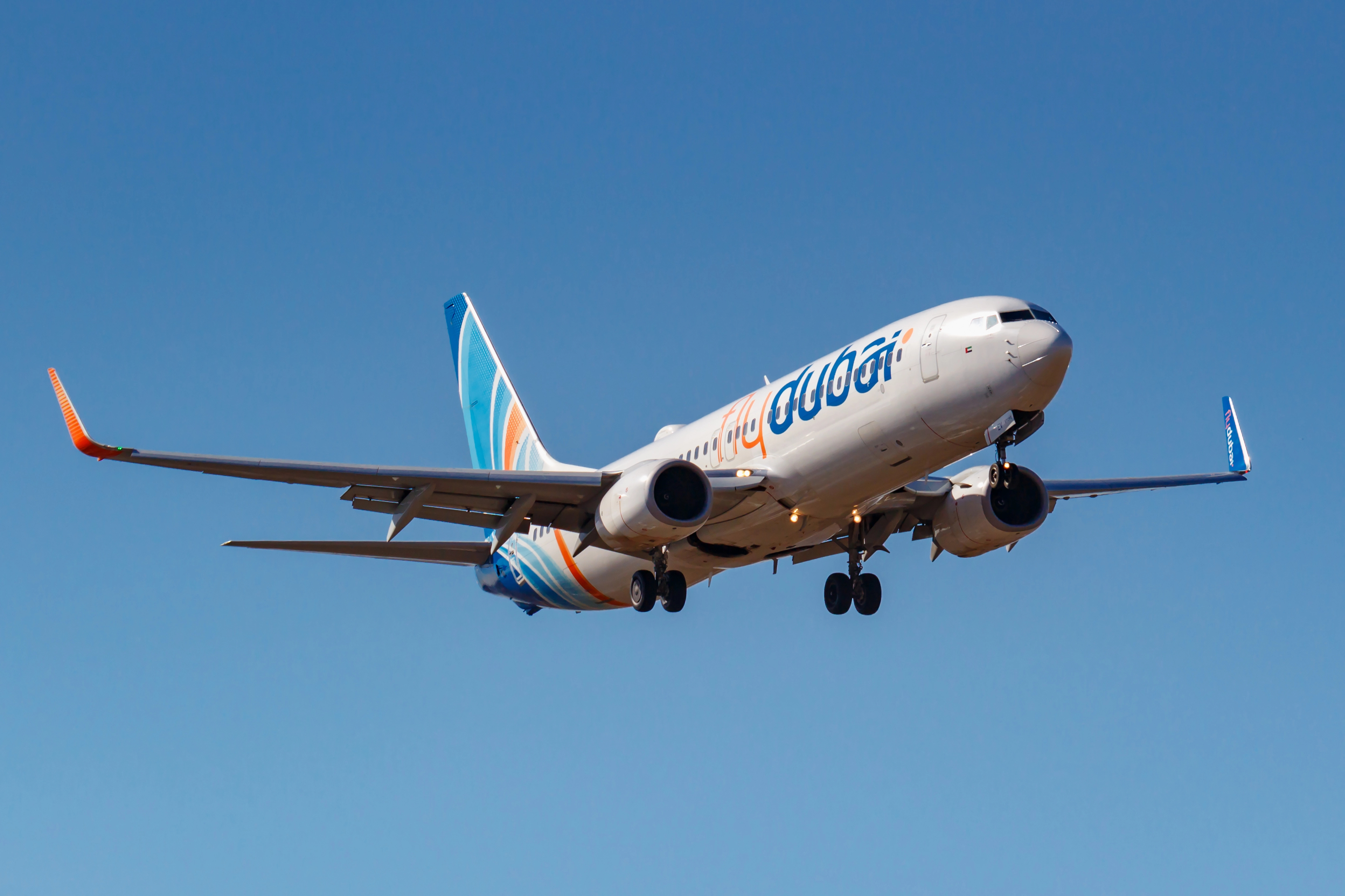


A FlyDubai commercial passenger aircraft flying from Dubai to Tel Aviv diverted and landed in Saudi Arabia on Wednesday morning after what Israeli officials described as an attempted hijacking by one of the pilots. The incident involved a mid-air altercation in which one pilot stabbed his co-pilot. Additional flight crew members, aided by Israeli passengers on board, managed to subdue the attacker and regain control of the aircraft. An Israeli official told the media that a major disaster was narrowly avoided. Growing assessments within Israeli security circles indicated that the pilot intended to crash the plane into the ground with more than 100 Israeli passengers aboard.
The flight, operating as FZ1073, carried a large number of Israeli travelers on a route that has become routine since the normalization of relations between Israel and the United Arab Emirates. Approximately two hours into the journey the aircraft transmitted a general emergency code, then switched to the international signal for unlawful interference, before reverting. Flight tracking data showed a sudden and steep loss of altitude. The plane eventually made a safe landing at Tabuk in northwestern Saudi Arabia. All passengers were reported safe and accounted for.
The Sequence Of Events In The Air
According to passenger accounts and official briefings, a violent struggle erupted in the cockpit. One pilot attacked the other with a knife, stabbing him and attempting to force him from his seat. The aircraft began to dive. Screams were heard in the cabin. Israeli passengers seated near the front rushed forward to assist. Together with other crew members who were traveling on the flight, they restrained the attacker. An Israeli dentist among the passengers treated the wounded pilot and is credited with helping to stabilize him.
The plane dropped thousands of meters in a short period. Passengers described moments of sheer terror in which they believed the aircraft was going down. Some recited the Shema. Others physically intervened to separate the pilots and secure the assailant. Once control was restored, the remaining capable crew guided the aircraft to an emergency landing in Saudi territory.
Israeli fighter jets were scrambled in response to the emergency signals. Saudi aircraft also responded. Contact with the plane was reestablished, and the situation was brought under control before any further escalation.
Official Assessment And Immediate Response
An Israeli official stated that a major disaster had been narrowly avoided. Security bodies including the IDF, Mossad, and Shin Bet began treating the episode as a potential act of terrorism. The fact that the attacker was a pilot with access to the controls of a commercial airliner carrying a large Israeli contingent raised immediate and serious concerns. The motive remained under investigation at the time of initial reports, but the combination of the stabbing, the attempt to seize control, and the rapid descent pointed to an intent far beyond a simple personal dispute.
Prime Minister Benjamin Netanyahu held urgent consultations. The Prime Minister’s Office later described the situation as under control and confirmed that all measures were being taken to return the Israeli passengers safely to Israel. Flydubai issued a statement confirming that the flight had experienced an incident en route, that the aircraft had landed safely in Tabuk, and that all passengers were safe.
The Broader Context Of Aviation Security
Commercial flights between the Gulf and Israel represent one of the tangible achievements of the Abraham Accords. Routes that were once unthinkable have become regular. That progress also creates new targets. A pilot determined to turn an aircraft into a weapon poses a uniquely difficult challenge. Standard passenger screening does not apply inside the cockpit. The presence of an additional crew and alert Israeli passengers proved decisive in this case.
The rapid intervention prevented what could have become a catastrophic loss of life. Comparisons to past aviation terror attacks were inevitable among officials reviewing the sequence. The successful restraint of the attacker and the safe landing demonstrated both the value of passenger vigilance and the effectiveness of coordinated emergency response across national boundaries. Saudi authorities facilitated the landing and the subsequent handling of the situation.
What Remains Unresolved
Full details about the identity, background, and precise motive of the attacking pilot had not been publicly confirmed in the initial hours. Whether the act stemmed from personal crisis, radicalization, or coordinated intent will be the subject of intensive investigation by multiple intelligence services. The wounded co-pilot’s condition and the exact role of the additional crew members traveling as passengers will also form part of the official inquiry.
For the passengers, the immediate priority was safe return to Israel. Arrangements were already underway to bring them home. Many had experienced a level of fear rarely encountered even in a region long accustomed to security threats. Their willingness to act under extreme pressure helped ensure that the flight ended on the ground rather than in tragedy.
A Narrow Escape With Lasting Implications
The incident underscores the persistent risks facing Israeli travelers and the state itself. Even on a routine commercial flight operated by a Gulf carrier, the possibility of an insider threat materialized in real time. The outcome depended on the courage of ordinary passengers and the professionalism of the remaining crew. A major disaster was avoided. That fact does not diminish the seriousness of what nearly occurred.
Israeli officials have every reason to treat the event with the gravity it deserves. An aircraft carrying more than one hundred of their citizens came within moments of catastrophe because one individual in the cockpit chose violence and apparent self-destruction over the lives of everyone on board. The successful resolution offers relief. It also serves as a stark reminder that vigilance cannot be relaxed, even on routes once considered symbols of regional progress.
The passengers are safe. The investigation continues. The narrow margin by which disaster was averted will remain the central fact of this episode for a long time to come.
Featured image credit: DepositPhotos.com